
From Workplace Injury to Addiction: The Danger of Opioid Painkillers in the Trades
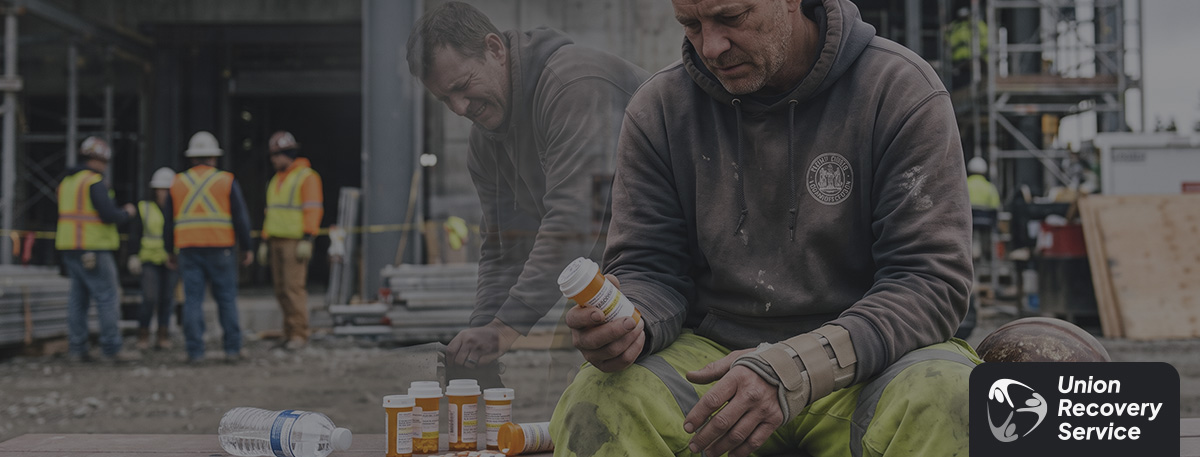
In the union trades, your body is your livelihood. Whether you are an ironworker, a longshoreman, an electrician, or a pipefitter, physical wear and tear is part of the job description.
But what happens when the pain becomes too much to ignore?
For decades, the standard medical response to a severe workplace injury or chronic musculoskeletal disorder (MSD) has been a prescription for opioid painkillers like OxyContin, Vicodin, or Percocet. While intended to help workers heal and get back on the job, these prescriptions have fueled a quiet, deadly epidemic within the construction and maritime industries.
Today, construction and trade workers are disproportionately devastated by opioid addiction. The pipeline from a legitimate workplace injury to a life-threatening substance use disorder is faster and more common than most realize.
The Staggering Statistics: Opioids in Construction
The numbers surrounding opioid use in the trades are alarming, pointing to a systemic crisis that goes far beyond individual choices.
- Highest Overdose Rates: According to the Centers for Disease Control and Prevention (CDC), construction workers have the highest mortality rates for drug overdose deaths compared to any other profession.
- The Injury Connection: One in three construction workers suffers from a musculoskeletal disorder. Opioid prescription use is three times higher among workers with these chronic injuries than those without.
- Rapid Dependency: Workers diagnosed with chronic MSDs who are prescribed opioids are more than four times as likely to develop an opioid use disorder compared to workers prescribed opioids for other reasons (like dental work).
- Jobsite Fatalities: Between 2011 and 2018, overdose deaths on construction jobsites increased nine-fold.
The Pipeline: How a Prescription Becomes a Problem
No union worker takes a pill after a scaffolding fall expecting to become addicted. The transition from pain management to chemical dependency is subtle and often driven by the unique culture of the trades.
1. The Pressure to Return to Work
In the trades, if you aren’t working, you aren’t getting paid. There is immense financial and cultural pressure to minimize recovery time and push through the pain. Opioids offer a chemical shortcut. They mask the pain well enough to get a worker through a 10-hour shift, but they do nothing to heal the underlying tissue damage.
2. Tolerance and the Need for More
Opioids are highly addictive because the body quickly builds a tolerance. The dosage that effectively numbed the pain of a herniated disc in week one will not work by week four. Workers often find themselves taking higher doses or taking the medication more frequently just to achieve the same level of relief, crossing the line from prescribed use to misuse.
3. The Cut-Off and the Street Supply
Eventually, a doctor will stop writing the prescription. When the legal supply of pills is cut off, a worker who has become chemically dependent faces severe withdrawal symptoms—chills, nausea, muscle aches, and intense anxiety.
To avoid “dope sickness” and stay on the job, some workers turn to the illicit market. This is where the danger spikes exponentially. Today’s unregulated drug supply is heavily contaminated with fentanyl, a synthetic opioid that is 50 to 100 times more potent than morphine. A massive percentage of overdoses in the trades today involve fentanyl-laced substances.
Breaking the Cycle: What Union Workers Can Do
The “tough guy” culture of the trades often prevents workers from admitting they have lost control of their pain medication. Silence is deadly. If you or a union brother or sister is struggling, immediate action is required.
- Understand Your EAP Benefits Your Employee Assistance Program (EAP) is entirely confidential. You can call your EAP to get help finding an in-network detox or rehab facility without your foreman or employer ever knowing.
- Utilize FMLA Protections Addiction is a legally recognized medical condition. Under the Family and Medical Leave Act (FMLA), you can take job-protected leave to attend a certified rehabilitation program. You do not have to choose between your life and your union card.
- Seek Non-Narcotic Pain Management If you suffer a workplace injury, proactively tell your physician you want to avoid opioids. Leverage your union health benefits to explore alternative therapies like physical therapy, chiropractic care, acupuncture, and non-addictive anti-inflammatory medications.
We Understand the Trades
At Union Recovery Service, we know that addiction in the trades usually starts with a genuine attempt to manage pain and keep providing for a family. We don’t judge; we provide solutions.
Our specialized detox and rehabilitation programs are designed specifically for the unique physical and psychological needs of union workers. We help you safely manage withdrawal, address underlying chronic pain, and navigate the return-to-work process.
Don’t let a workplace injury cost you your life. Call us 24/7 at (858) 295-0853 for completely confidential guidance