
Addiction on the Docks: The Unique Pressures Faced by ILWU and Maritime Workers
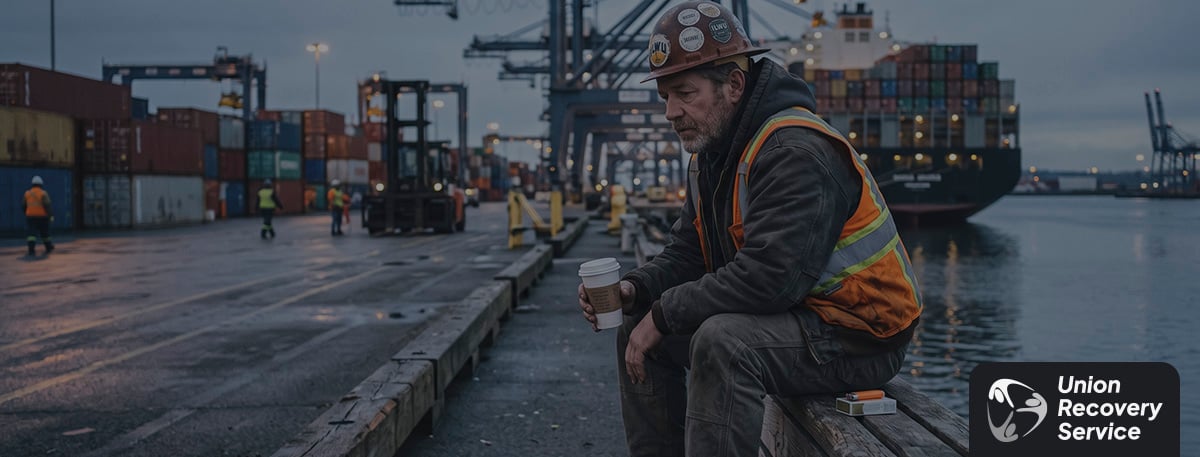
Working on the waterfront isn’t just a job; it’s a lifestyle, and often a generational legacy. For the members of the International Longshore and Warehouse Union (ILWU)—whether you’re a longshoreman in Local 13, a marine clerk in Local 63, or a foreman in Local 94—the docks run 24/7, and they demand everything you have.
But this intense environment comes with a hidden cost. Longshore work generates more concentrated addiction risk than almost any other occupation in the United States.
The combination of biomechanical stress, severe shift-work fatigue, and a high-stakes operational culture drives rates of alcohol and opioid use disorder well above national averages. Your union recognized this reality decades ago.
1. The Circadian Wrecking Ball: Shift Work and Substance Use
The single biggest driver of mental health struggles and substance abuse on the docks is the schedule. Operating massive cranes or container handlers across rotating day, swing, and early-morning shifts completely destabilizes your circadian rhythm.
When your sleep is constantly disrupted, your body enters a state of chronic stress, overproducing cortisol. This dysregulates your nervous system. Many longshoremen find they cannot shut their brains off after a swing shift, turning to heavy alcohol consumption just to force themselves to sleep. Over time, alcohol use disorder develops not as a “partying” habit, but as an ineffective coping mechanism for extreme sleep deprivation.
2. The Injury-to-Opioid Pipeline
Longshoremen operate heavy machinery in a high-consequence environment where a single mistake can be fatal. The biomechanical stress of the job accumulates as cumulative trauma disorder (CTD) in the lower back, shoulders, and knees.
However, because dispatch priority and financial stability often depend on simply showing up, many workers downplay or ignore early-stage injuries. When the pain finally reaches a breaking point, the standard medical response is often an opioid prescription.
Workers with lost-time occupational injuries face nearly three times the hazard of opioid-related dependence. What starts as pain management to get back into the crane often spirals into a severe physiological addiction.
3. The Port Culture and the Fear of Stigma
The waterfront culture is defined by loyalty, grit, and getting the job done. There is a deep fear among union members that asking for help with an addiction or a mental health crisis will cost them their reputation, their dispatch priority, or the respect of their crew.
Additionally, because longshore work often isolates members from their families due to irregular hours, the crew becomes a second family. When the culture of that crew normalizes heavy drinking after shifts, recognizing that you have a problem—and stepping away to fix it—feels like abandoning your brothers and sisters.
Your Lifeline: The ILWU-PMA Alcoholism/Drug Recovery Program (ADRP)
If you are struggling, you do not have to choose between your health and your livelihood. The ILWU negotiated dedicated substance use disorder coverage decades before most employers even acknowledged addiction as a medical condition.
The ILWU-PMA Welfare Plan’s Alcoholism/Drug Recovery Program (ADRP) is a union-built lifeline with protections that go beyond federal law.
What you need to know about the ADRP:
- Total Confidentiality: Your participation is completely confidential. Contacting your ADRP representative does not trigger any employment or disciplinary process.
- Your Paycheck is Protected: Your weekly indemnity benefits continue during approved residential care, meaning you lose no income while you are in treatment.
- Your Job is Safe: Federal FMLA and ADA laws, combined with union protections, guarantee that you cannot be fired or lose seniority for voluntarily seeking treatment.
- Comprehensive Care: The Coastwise Indemnity Plan covers everything from medically supervised detox and residential inpatient care to medication-assisted treatment (MAT) and dual-diagnosis therapy for co-occurring PTSD or depression.
How to Get Help Without Losing Your Job
If you are an ILWU member in Southern California (Locals 13, 26, 63, or 94), your first step is a completely confidential call to your regional ADRP representative, or directly to a specialized treatment center that understands maritime benefits.
At Union Recovery Service, we understand the port. We know the difference between a casual worker trying to make their hours and a Class A longshoreman fighting to keep their card. We work directly with union health plans and the ADRP to ensure your admission is seamless, confidential, and fully covered.
Don’t wait until a failed test on the docks forces the issue. Call us 24/7 at (858) 295-0853 for completely confidential guidance