
Breaking the Stigma: Why Asking for Help Makes You a Stronger Union Brother or Sister
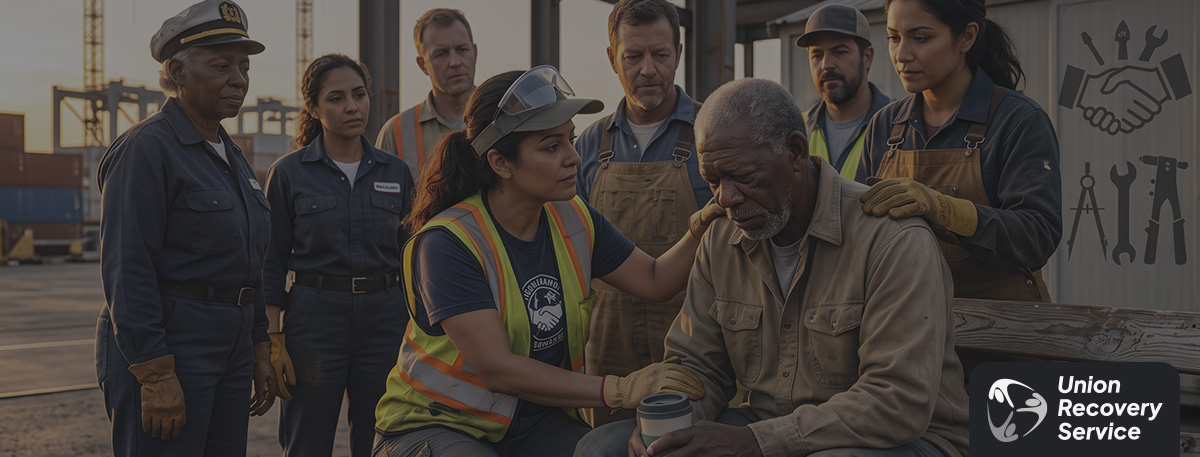
In the union trades, the culture is built on a simple premise: you show up, you do the job, and you don’t complain. We are taught to fix problems, not feel them. We value grit, strength, and the ability to push through the pain to get the job done and provide for our families.
But this same culture of toughness is killing us.
When the physical pain of a 30-year career stacks up alongside long commutes, forced overtime, layoff anxiety, and the isolation of being on the road, the pressure has to go somewhere. Too often, instead of asking for help, union members quietly self-medicate or suffer in silence because they fear looking weak or losing their job.
It is time to change the definition of what it means to be strong in the trades. Breaking the stigma around mental health and addiction isn’t just about feeling better; it’s about survival, safety, and being a solid union brother or sister.
The Cost of the "Tough Guy" Culture
The statistics in our industry are devastating. The construction industry consistently ranks among the highest for suicide rates, and drug overdoses (often starting with a prescription for a workplace injury) claim more trades workers’ lives than ever.
A recent study by North America’s Building Trades Union found that just 5% of trades workers had consulted a mental health professional, compared to 22% of the general population.
Why the massive gap? Stigma.
We hide our struggles because we worry:
- “Will the foreman think I can’t handle the job?”
- “Will my crew trust me to watch their back if they know I’m in rehab?”
- “If I admit I’m struggling, will they pull my union card?”
The reality is exactly the opposite. Hiding an addiction or a mental health crisis is what puts you, your crew, and your career at risk.
Why Asking for Help Makes You Stronger
When you step onto a jobsite, you rely on the person next to you to be sharp, focused, and fully present. In our line of work, a mistake doesn’t just mean a missed deadline; it can mean a catastrophic injury or worse.
- You Protect the Crew Addiction and severe depression compromise your decision-making and reaction times. You cannot be a reliable spotter, operator, or rigger if you are nursing a hangover, going through withdrawals, or completely consumed by anxiety. Admitting you need help and stepping away to get it is the ultimate act of protecting your crew. It means you refuse to put their lives at risk because of your pride.
- You Keep the Brotherhood/Sisterhood Alive Every time a union worker speaks up about their struggles, they give permission for someone else to do the same. Many members never label what they feel as depression or dependency—they call it a “rough week” and keep swinging the hammer. When you are honest, you might be saving the life of the apprentice working next to you who thought they were the only one suffering.
- It Takes Real Grit to Face Your Demons Anyone can numb the pain with a bottle or a pill. It takes genuine courage to walk into a rehab facility or sit across from a therapist and face the root causes of your pain and trauma. That is the kind of toughness that builds resilience, not the kind that eventually breaks you.
How the Union is Changing the Narrative
Across the country, unions are recognizing that mental health is a safety issue, just like fall protection or lockout/tagout procedures.
- Peer Support Programs: Many locals now run Member Assistance Programs (MAP) staffed by trained “peers”—often union members who are themselves in recovery. They know what it’s like to work 60-hour weeks in the freezing rain, and they understand the culture better than an outside counselor ever could.
- Safety Stand-Downs & Hardhat Stickers: Job sites are increasingly integrating mental health into their daily safety meetings. Seeing a suicide prevention or “It’s okay to not be okay” sticker on a steward’s hardhat signals that it is safe to talk.
- Confidential EAPs: Your union fought for health benefits that include confidential Employee Assistance Programs (EAPs). Using them is a right, not a weakness.
Start the Conversation Today
Breaking the silence isn’t one big moment. It is the small, daily choice to ask your coworker how they are really doing, or the courage to admit that you need to step away and get right.
At Union Recovery Service, we provide confidential, specialized addiction treatment built specifically for the men and women of the trades. We know your culture, we respect your grit, and we are here to help you get your life back.
Don’t let pride cost you your life or your livelihood. Call us 24/7 at (858) 295-0853 completely confidential guidance